

PCHELODAR
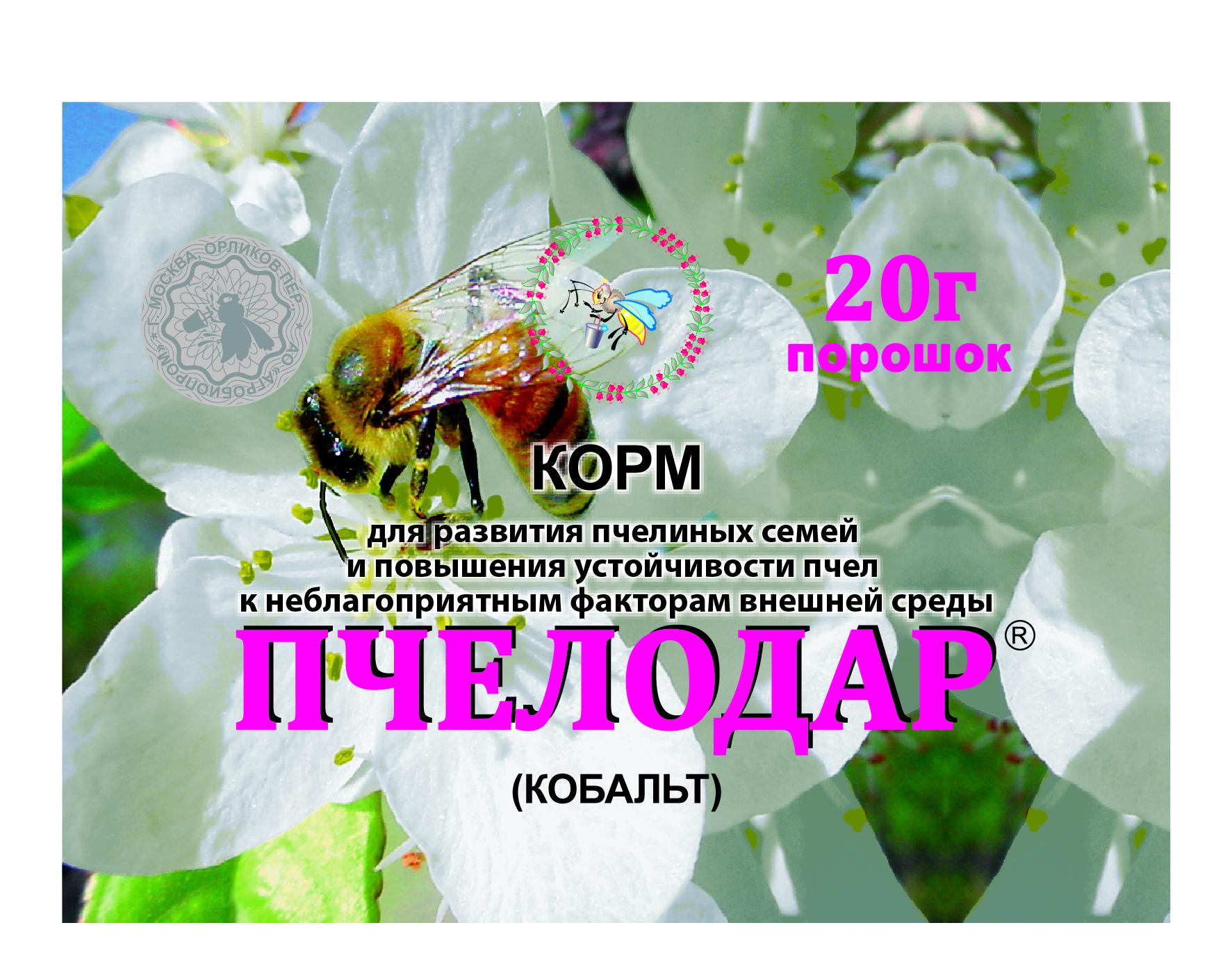
Feed to promote the development of bee colonies and increase bees’ resistance to adverse environmental factors

The feed includes cobalt, ascorbic acid, and glucose, which have a stimulating effect on the growth, development, and productivity of bee colonies, increase the intensity of egg-laying by queen bees, and the resistance of bees to adverse environmental factors.

Administer Pchelodar to bees mixed with sugar syrup in spring (in April-May) and at the end of summer (in August-early September) during the period of building up the strength of colonies before the major honey collection, in the event of poor pollen collection or poor stocks of bee bread in the hives, to help them prepare for wintering.
Dissolve the package contents in 10 liters of warm (35–40 °C) sugar syrup, prepared in a ratio of 1 : 1. In spring, pour the prepared syrup into the upper hive feeders at the rate of 300–500 ml of syrup per colony and administer it 2–3 times with an interval of 2–3 days.
At the end of summer, after the honey extraction, feed the prepared syrup to the bees at the rate of 1.5–2 liters, depending on the strength of the colony.

Open the package immediately before application. Honey collected from colonies fed with Pchelodar may be consumed without restrictions.

Hermetically sealed foil bags, 20 g each.

Store in the original container in a dry place, protected from sunlight, out of reach of children, at a temperature of 0 to +25 °C.

The product shelf life, subject to compliance with storage conditions in the original unopened container, is 3 years from the date of manufacture. Do not use the feed after the expiration date.
