

ECOPOL
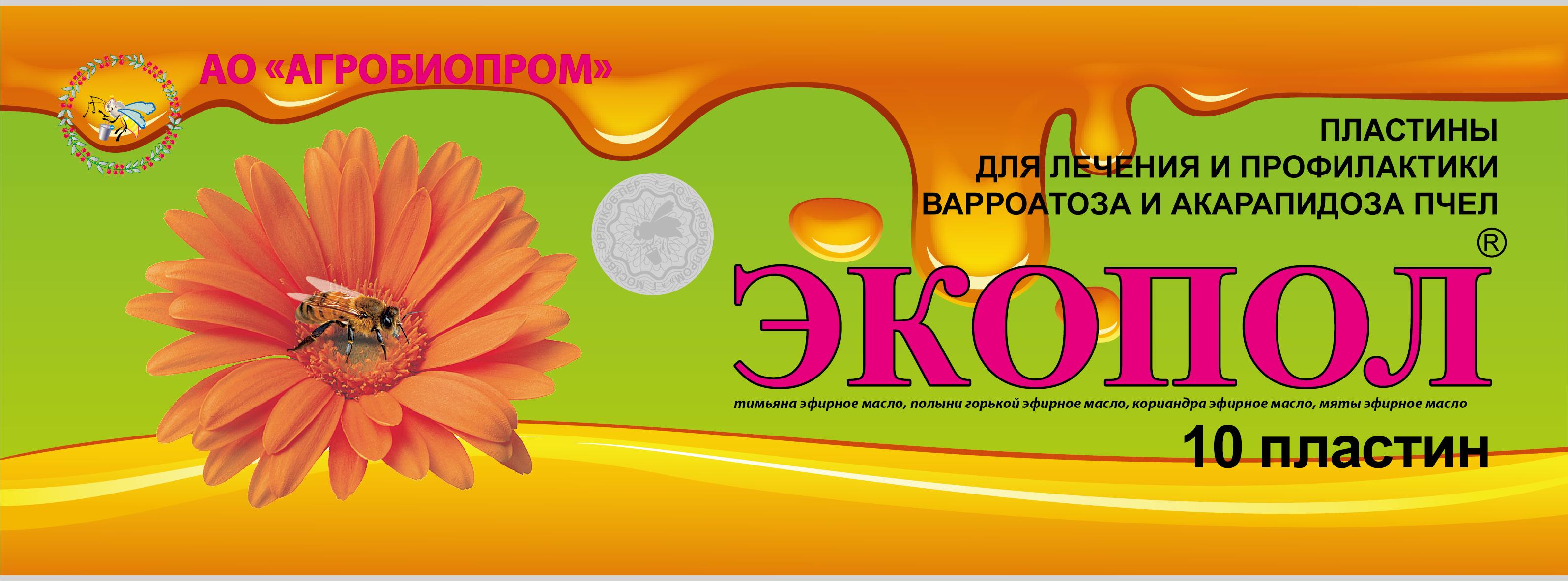
For the treatment and prevention of bees’ varroatosis and acarapidosis

Veterinary plate
Ecopol contains in 1 plate as an active ingredients: thyme essential oil – 50 mg, wormwood essential oil - 30 mg, coriander essential oil - 80 mg, mint essential oil - 20 mg, excipients, planed veneer.
Ecopol is made in the form of light beige to brown wooden plates with the smell of essential oils included in the drug.

Ecopol belongs to the group of antiparasitic drugs for veterinary use (insecticidal and acaricidal drugs).
The essential oils included in the drug ensure the pharmacological properties of the drug due to the action of their components.
Thyme essential oil. The main components of thyme essential oil are thymol 20-55%, carvacrol - up to 5.5%, paracymol - up to 28%, linalool – up to 6.5%, a-terpineol, borneol. The composition of the oil also includes fats, carbohydrates, proteins, bitterness, gum, tannins, triterpene compounds (ursolic and oleanolic acids), flavonoids and trace elements, B vitamins, vitamin A, niacin, ascorbic acid, folic acid. Thymol affects the biochemical and physiological processes of parasites, depressing their vital activity. Thyme essential oil has a bactericidal, fungicidal, antiviral, anti-putrefactive and general stimulating effect on the body of bees.
Coriander essential oil. The oil contains over 20 components, the main of which are linalool at least 60%, linalyl acetate up to 5%, camphor up to 6%, geraniol, geranyl acetate, borneol, their acetic esters and aldehydes (decyl, decylene, isodecylene). The oil also contains monocyclic terpenes - terpinene and fellandren, from bicyclic - pinene. Due to their close connection with organic acids, esters have antifungal and antimicrobial effects, exhibit antiparasitic properties. Linalool and camphor, when combined, have acaricidal and fungicidal properties. Linalool, being a lipophilic compound, is easily included in the metabolism and disrupts the biochemical processes in the cells of parasites, which leads to their death.
Mint essential oil. The oil contains menthol about 50%, mentone up to 20%, menthyl acetate up to 8%, limonene, 3-pinene, dipentene, cineol, pulegone and hesperidin and other terpenoids, ursulic and oleanolic acids; flavonoids, carotenoids, tannins, betaine, trace elements (Mn, Cu, Sr) and other substances. Mint essential oil has antiparasitic, antiseptic, antifungal and antimicrobial properties. Menthol belongs to monocyclic monoterpenes, has a pronounced repellent effect against wax moths due to a specific smell.
Wormwood bitter essential oil. The oil contains alpha-thujone - 1-15%, beta-thujone - 30-50%, cineol - 20%, limonene - up to 5%, resinous and tannins, absintin, anabsintin, limonene, ketolactones, malic and succinic acids, saponins, phytoncides and terpenoid compounds, as well as thujol, fellandren, vitamins and macronutrients. Absintin and anabsintin belong to sesquiterpenes, the action of which contributes to the disruption of the metabolism of parasites, inhibition of their vital activity and death. Wormwood essential oil has antiseptic, antiparasitic, antiviral and antimicrobial properties.
The combination of thyme, coriander, wormwood and mint essential oils in the drug composition ensures its pronounced acaricidal and insectoacaricidal effect against the causative agents of bees’ varroatosis, i.e. the Varroa destructor mite, and bees’ acarapidosis, i.e. the Acarapis woodi mite, as well as repellent action against the wax moth. The essential oil mechanism of action is to block the transmission of nerve impulses, which causes impaired coordination of movements, paralysis and death of mites.
The therapeutic effect is achieved when bees come into contact with Ecopol plates.
According to the degree of exposure to the organism, Ecopol refers to low-risk substances, in recommended doses, it does not have a locally irritating and sensitizing effect.
Ecopol is not toxic to bees, in recommended doses it does not adversely affect the vital activity and productivity of colonies.

The drug is used for the treatment and prevention of bees’ varroatosis and acarapidosis.
Do not use the drug less than 14 days before the start of the major honey collection to avoid the drug penetration into marketable honey.
When using a product, the general rules of personal hygiene and safety provided for when using drugs should be observed. Smoking, drinking and eating are prohibited during the usage. Empty packaging from under the drug is prohibited to be used for household purposes, it is subject to disposal with household waste.
In case of accidental contact of the drug with the skin or mucous membranes of the eyes, they must be rinsed with plenty of water.
People with hypersensitivity to the components of the drug should avoid direct contact with it. In case of accidental contact of the drug with the skin or mucous membranes of the eyes, they must be rinsed with plenty of water. In case of allergic reactions or accidental ingestion of the components of the drug into the human body, you should immediately contact a medical institution (take the instructions for use or label with you).
Apply Ecopol to bees in spring (after examining colonies and a mass play flight) before the start of the major honey collection and in the summer-autumn period (after the honey extraction).
Place Ecopol in hives at the rate of 2 plates per 10–12 nesting frames. For small colonies (up to 6 frames), offshoots and nuclei, 1 plate to be placed in the center of the nest is enough.
In a weak colony, hang one plate between the 3rd and 4th comb frames, in a strong colony – one plate between the 3rd and 4th comb frames, and the second plate between the 7th and 8th comb frames. Keep the plates in colonies for 7 to 30 days, depending on the amount of sealed brood.

Adverse reactions and complications when using the drug in accordance with the instructions for use, as a rule, are not observed.
Symptoms of drug overdose in bees have not been established.
Honey obtained after the use of Nezamin can be used no earlier than 20 days after the end of the use of the drug in accordance with this instruction.

Ecopol is produced packaged, 10 plates in hermetically sealed bags made of metallized film.

Store the drug in the original unopened container, in a place protected from moisture and direct sunlight, separately from food and feed, at a temperature of 0 to +25 °C.
Keep Ecopol out of reach of children. Use immediately after opening the package.
It is released without a prescription from a veterinarian.
The unused drug is disposed of in accordance with the requirements of the legislation.

The drug shelf life, subject to compliance with storage conditions in the original unopened container, is 3 years from the date of manufacture. Do not use the drug after the expiration date.

