

STOPMOL Veterinary plate
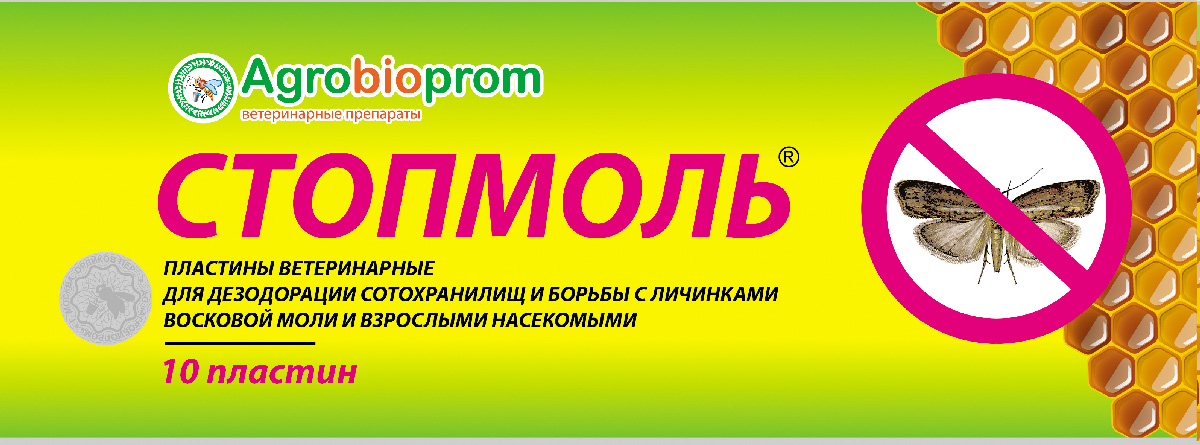
For wax moth control and honeycomb deodorization

Cardboard plates containing tau-fluvalinate, lavender essential oil, and garlic essential oil as drug substances. It has an insecticidal effect against all stages of the wax moth development due to the volatile activity of its components.

Remove severely affected honeycombs from the hive and melt it into wax.
Treat slightly affected honeycomb frames not destroyed by a moth with Stopmol. To do this, open the package, release the plates and place them on the upper bars of the honeycomb frames at the rate of 2 plates per 10–12 frames.
Place the frames with plates in smallsized sealed cells or pack them in thick cellophane. After 45 days, remove the plates.

Smoking, drinking and eating are prohibited during the usage. At the end, wash your face and hands thoroughly with soap.
Use honeycomb frames treated with Stopmol in spring without restrictions. Do not use in conjunction with other insecticides.

Hermetically sealed foil bags, 10 plates in each.

Store in the original unopened container, in a dry place, protected from sunlight, away from food and feed, at a temperature of 0 to +25 °C. Keep out of reach of children.

The product shelf life, subject to compliance with storage conditions in the original unopened container, is 3 years from the date of manufacture. Do not use after the expiration date.
